
Why Predictive Maintenance Is Becoming the Most Important Technology in Modern Shipping
Rather than waiting for equipment to fail or relying solely on fixed maintenance intervals, predictive maintenance uses real-time data and condition monitoring to identify potential problems before they become serious failures. This proactive approach is helping shipping companies improve reliability, reduce costs, and increase vessel availability.
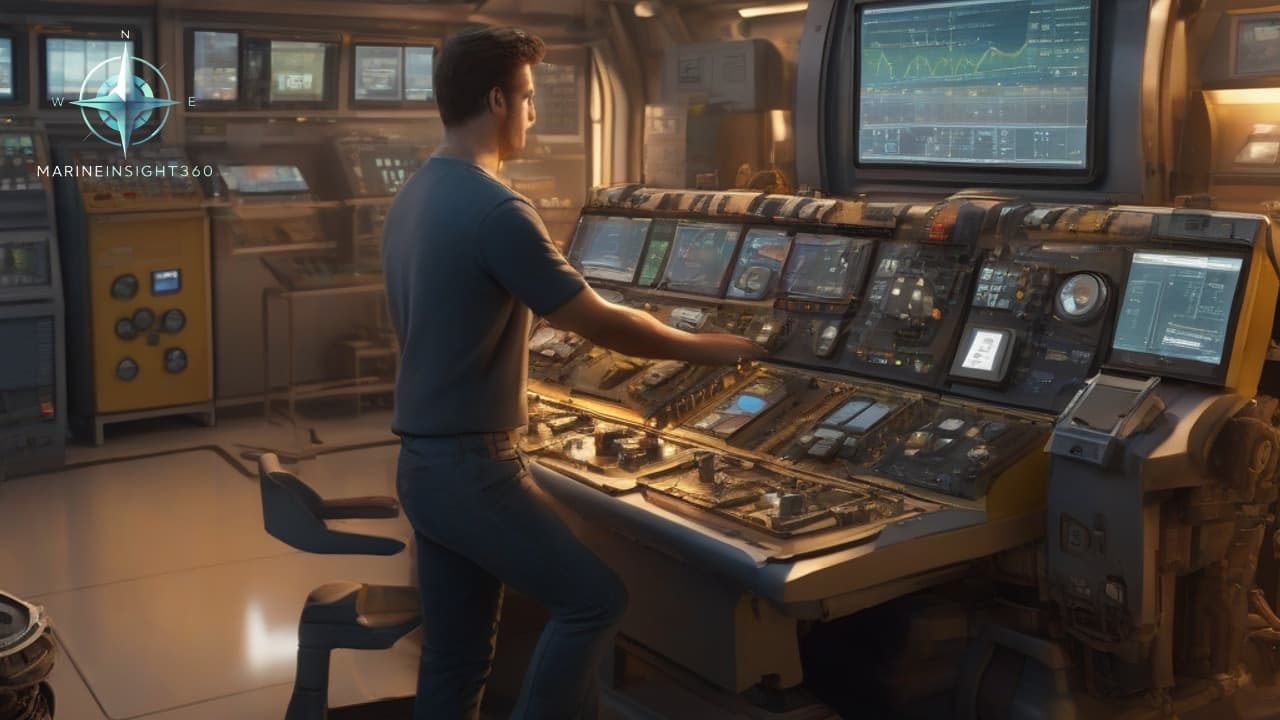
The maritime industry has always relied on experience, routine inspections, and planned maintenance schedules to keep vessels operating safely. While these traditional methods have served shipowners for decades, today's shipping environment is far more demanding. Rising operating costs, stricter regulations, crew shortages, and increasing pressure to reduce downtime are forcing shipping companies to rethink how they maintain their fleets.
As a result, predictive maintenance has emerged as one of the most important technological developments in modern shipping.
Rather than waiting for equipment to fail or relying solely on fixed maintenance intervals, predictive maintenance uses real-time data and condition monitoring to identify potential problems before they become serious failures. This proactive approach is helping shipping companies improve reliability, reduce costs, and increase vessel availability.
What Is Predictive Maintenance?
Predictive maintenance is a maintenance strategy that uses equipment data, sensor readings, performance trends, and analytics to predict when machinery is likely to require attention.
Instead of replacing components based solely on calendar schedules or running hours, engineers can make maintenance decisions based on the actual condition of the equipment.
Modern predictive maintenance systems continuously monitor critical machinery such as:
- Main engines
- Auxiliary engines
- Pumps
- Compressors
- Boilers
- Purifiers
- Cargo handling equipment
- Steering systems
When unusual patterns or performance deviations are detected, alerts are generated so that corrective actions can be taken before a breakdown occurs.
Why Traditional Maintenance Is No Longer Enough
For many years, shipping companies relied on planned maintenance systems (PMS) to manage vessel maintenance. While planned maintenance remains essential, it has certain limitations.
Equipment does not always wear at predictable rates. Two identical pumps operating on different vessels may experience completely different operating conditions and maintenance requirements.
This often results in either:
- Over-maintenance, where components are replaced too early
- Under-maintenance, where hidden issues go unnoticed until failure occurs
Both situations increase costs and operational risks.
Predictive maintenance bridges this gap by allowing operators to understand the actual health of equipment rather than relying solely on assumptions.
The Financial Benefits for Shipowners
One of the primary reasons predictive maintenance is gaining momentum is its direct impact on operating expenses.
Unexpected equipment failures can result in:
- Emergency repair costs
- Voyage delays
- Off-hire periods
- Port state control deficiencies
- Increased spare part expenses
- Environmental incidents
A single machinery failure during a voyage can cost significantly more than the investment required for a monitoring system.
By identifying issues early, shipowners can schedule repairs during planned maintenance windows, reducing disruption to vessel operations.
Improving Safety Onboard
Safety remains the highest priority in the maritime industry.
Many serious incidents at sea originate from equipment failures that initially appeared minor. Engine room fires, steering failures, and propulsion loss can often be traced back to machinery issues that developed gradually over time.
Predictive maintenance allows engineers to detect warning signs before equipment reaches a critical state.
Early intervention not only protects the vessel but also improves crew safety and operational confidence.
The Role of Artificial Intelligence in Vessel Maintenance
Artificial Intelligence is playing an increasingly important role in predictive maintenance systems.
Advanced software platforms can now analyze thousands of operational data points every minute. Machine learning algorithms identify trends that may not be visible through traditional inspections.
These systems can evaluate:
- Engine performance
- Fuel consumption patterns
- Lubrication conditions
- Vibration levels
- Temperature variations
- Pressure fluctuations
As more data becomes available, prediction accuracy continues to improve.
The result is smarter maintenance planning and better decision-making across entire fleets.
Digital Fleet Management Is Driving Adoption
The growing use of cloud-based fleet management systems has accelerated the adoption of predictive maintenance.
Modern shipping companies are increasingly integrating:
- Planned Maintenance Systems (PMS)
- Vessel Performance Monitoring
- Condition Monitoring
- Inventory Management
- Compliance Reporting
into a single digital platform.
This integration provides shore management teams with real-time visibility of vessel conditions regardless of location.
Instead of reacting to problems after they occur, managers can proactively coordinate maintenance activities across the fleet.
Challenges to Implementation
Despite its benefits, predictive maintenance is not without challenges.
Successful implementation requires:
- Reliable sensor infrastructure
- Quality data collection
- Crew training
- Cybersecurity measures
- Integration with existing maintenance systems
However, as technology costs continue to decrease, these barriers are becoming easier to overcome.
Even medium-sized shipping companies are now exploring predictive maintenance solutions that were once available only to large fleet operators.
The Future of Maritime Maintenance
The future of ship maintenance is moving toward condition-based and data-driven decision making.
Classification societies, shipowners, and technology providers are increasingly collaborating to develop smarter maintenance frameworks that improve reliability while reducing operating costs.
Over the next decade, predictive maintenance is expected to become a standard feature onboard many commercial vessels, much like planned maintenance systems are today.
Companies that embrace these technologies early will likely gain a competitive advantage through improved efficiency, better compliance, and enhanced operational performance.
Final Thoughts
Predictive maintenance is no longer a concept for the future. It is becoming a practical reality across the global shipping industry.
As vessels become more connected and digital technologies continue to evolve, the ability to predict equipment failures before they occur will transform how fleets are managed.
For shipowners seeking to improve reliability, reduce maintenance costs, and enhance safety, predictive maintenance is rapidly becoming one of the most valuable investments available in modern shipping.
More from the Blog
Important Points for Committing Cargo Quantities in Tanker Ships
Committing cargo quantities on tanker ships is a critical commercial and operational decision. Whether it is crude oil, refined petroleum products,…
What is Displacement of a Ship ?
Imagine a colossal container ship like the Ever Given, stuck in the Suez Canal back in 2021. That beast weighs over 200,000 tons when fully loaded,…

Understanding Cruise Ship Hull Design
Cruise ships rely on hull shapes that blend form with function. Designers pick shapes to cut through water with less effort. This boosts speed and cuts…