
What are Lubber lines?
For centuries, the magnetic compass has been considered the primary navigation tool for ocean voyages.
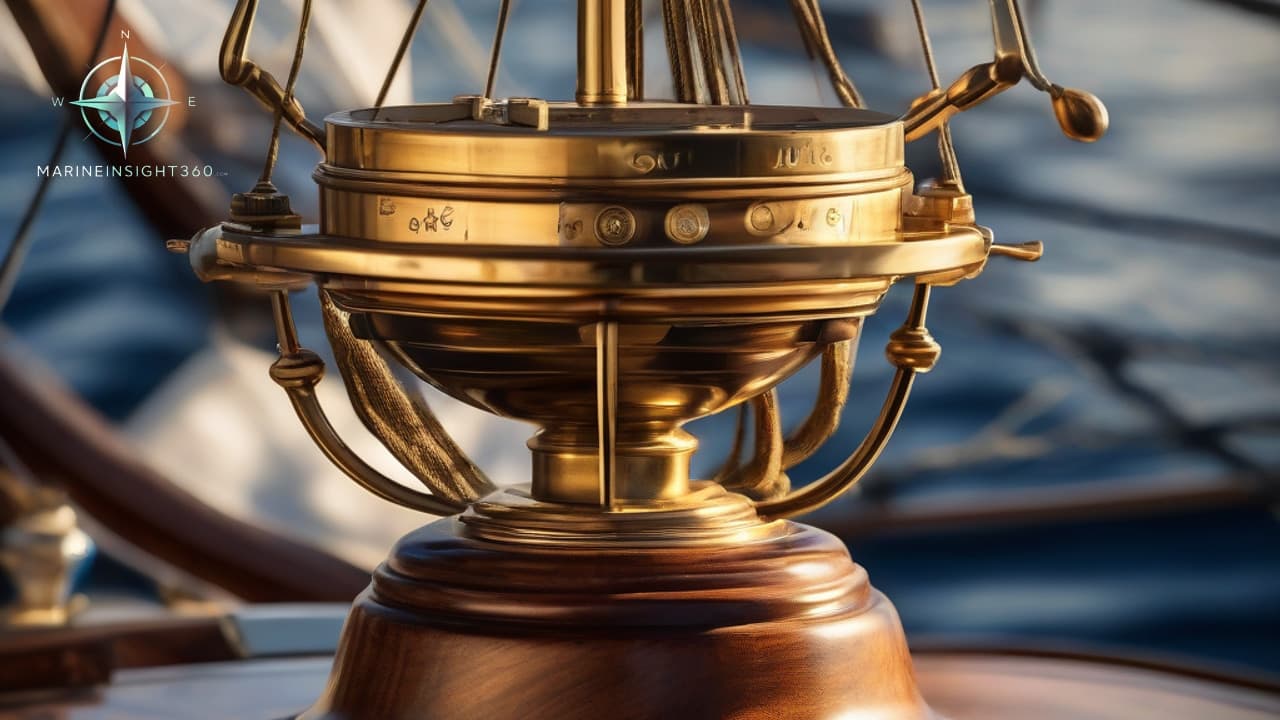
What are Lubber lines? For centuries, the magnetic compass has been considered the primary navigation tool for ocean voyages. Today, advanced technologies such as the Global Positioning System (GPS) or digital systems using high-precision satellite data have made navigation much easier and enabled communication with ships from virtually anywhere. Nevertheless, the compass remains a backup device on almost all ships, its importance undiminished.
In short, devices such as magnets or magnetometers operate based on the fundamental principle of the Earth's magnetic field, indicating direction according to it. Therefore, when the compass needle points slightly north, the ship is sailing north.
When analyzing a compass, a reference point is needed to determine the ship's bearing. This is where Lubber lines come in. Lubber lines are calibration marks on the compass dial used to indicate the ship's longitudinal axis or bearing. They appear as thin lines, marks, or bars aligned with the ship's bearing. The term originates from the nautical term "lubber," meaning sailor.
These lines are essential for navigation, as they provide a visual reference for the ship's direction, allowing sailors to determine their course and make adjustments as needed.
Understanding Nautical Reference Lines
In practice, because the compass or other navigation instruments are located on the bridge at the bow of the ship, nautical reference lines appear almost as straight lines on the instrument. Nautical reference lines are used as navigational references to indicate the angle between a ship's bearing and any given direction.
For example, when a navigation reference line forms an angle of approximately 45 degrees with true north on a compass, the ship's heading is approximately 45 degrees off from true north. Nautical reference lines also indicate that the ship's bearing is zero. In many cases, in addition to the primary reference line, an auxiliary reference line may be set every 45 degrees.
According to the International Maritime Organization (IMO) guidelines, ships must be equipped with navigation instruments that meet specific standards, including the use of nautical reference lines. The Safety of Life at Sea (SOLAS) convention requires that all ships be equipped with a magnetic compass, and that it be properly calibrated and maintained. The use of Lubber lines is an essential part of this calibration process, as it allows sailors to determine the ship's bearing and make adjustments as needed.
Additionally, the International Safety Management (ISM) Code requires that ships have a safety management system in place, which includes procedures for navigation and communication.
Practical Applications of Lubber Lines
In modern instruments, such as GPS or radar maps, the line of sight is usually displayed digitally on a control panel or screen. However, the use of Lubber lines is still essential for navigation, particularly in situations where electronic instruments may fail or be unavailable. For example, in the event of a power outage or equipment failure, sailors may need to rely on traditional navigation methods, including the use of a magnetic compass and Lubber lines.
In these situations, the ability to read and interpret Lubber lines can be critical for safe navigation.
Furthermore, the use of Lubber lines is also important for training and education purposes. The Standards of Training, Certification and Watchkeeping (STCW) convention requires that sailors receive training in navigation and communication, including the use of traditional navigation instruments such as the magnetic compass. The use of Lubber lines is an essential part of this training, as it allows sailors to develop the skills and knowledge needed to navigate safely and effectively.
The Maritime Pollution (MARPOL) convention also emphasizes the importance of proper navigation and communication in preventing pollution and protecting the marine environment. The use of Lubber lines can help sailors to navigate safely and avoid accidents, which can help to prevent pollution and protect the environment. In addition, the use of Lubber lines can also help to improve vessel performance and efficiency, by allowing sailors to optimize their course and speed.
Conclusion and Best Practices
In conclusion, Lubber lines are an essential part of navigation, providing a visual reference for the ship's direction and allowing sailors to determine their course and make adjustments as needed. The use of Lubber lines is required by international maritime standards, including SOLAS and the ISM Code, and is an important part of safe navigation practices. By understanding and using Lubber lines effectively, sailors can help to ensure safe and efficient navigation, and prevent accidents and pollution.
Best practices for the use of Lubber lines include regular calibration and maintenance of navigation instruments, as well as training and education in traditional navigation methods. Sailors should also be familiar with the use of electronic navigation instruments, such as GPS and radar maps, and know how to use them in conjunction with traditional navigation methods. By following these best practices, sailors can help to ensure safe and efficient navigation, and protect the marine environment.
Some key takeaways for maritime professionals include:
- Understanding the importance of Lubber lines in navigation and their role in determining the ship's bearing
- Familiarity with international maritime standards, including SOLAS and the ISM Code
- Regular calibration and maintenance of navigation instruments
- Training and education in traditional navigation methods, including the use of Lubber lines
- Knowledge of electronic navigation instruments, such as GPS and radar maps, and how to use them in conjunction with traditional navigation methods
By following these guidelines and best practices, maritime professionals can help to ensure safe and efficient navigation, and protect the marine environment.
More from the Blog

Important Points for Committing Cargo Quantities in Tanker Ships
Committing cargo quantities on tanker ships is a critical commercial and operational decision. Whether it is crude oil, refined petroleum products,…
What is Displacement of a Ship ?
Imagine a colossal container ship like the Ever Given, stuck in the Suez Canal back in 2021. That beast weighs over 200,000 tons when fully loaded,…
Understanding Cruise Ship Hull Design
Cruise ships rely on hull shapes that blend form with function. Designers pick shapes to cut through water with less effort. This boosts speed and cuts…