Maritime Career Guide
Maritime careers have positive and negative aspects involved in the selection process. If you want to work in this maritime industry, you have a wide range of opportunities before you. These range from entry-level positions to acquiring a college degree. Maritime jobs include everything from deckhand to cook, officer, and captain.
About Maritime Career
Maritime careers are available on different levels, starting from beginners and finishing with highly qualified and experienced job seekers. Jobs in the marine industry fall into four main categories:
Sailors are people who serve in a ship that navigates or operates at sea all over the globe. There are actually a lot of available positions on a ship, ranging from maintaining the ship to commanding it.
Ports are active places where ships call, resulting in traffic, and a large workforce is essential for operations. These include stevedores, repair workers, engineers, and business professionals, among others, who need to be assessed by a physician.
Officer Engineers, Stewards, Deckhands, chefs, and various other personnel are required to manage cruise and leisure boating companies. They need various skills, from performing to preparing food.
These are places where ships are constructed and overhauled, commonly called shipbuilders. They acquire laborers, electricians, welders, pipefitters, and many other qualified employees.
In most cases, whenever one hears of maritime jobs, one imagines the employees in the sea who work on ships at sea. Reliant’s other industries’ careers may involve skills that one can learn from a trade school or apprenticeship and then use in dock work or shipbuilding. But the passage to becoming a sailor is not the same.
There are junior positions at sea, and a marine education program is the best way to ensure you have the right skills and choices. The options are maritime academies, colleges, and vocational training institutions.
Some people wish to start immediately, and the apprenticeship is good for them because they are unwilling to attend classroom sessions. The rest have time to get a degree first. University and college programs have been developed to strengthen this force and accommodate these future sailors.
Here are things to consider when choosing an education path: Job, skills, training, availability, and costs.
United States Merchant Marine Academy (USMMA)
The USMMA educates people to be maritime officers. While it may not be a military academy, it is a federal service academy. Graduates are licensed Merchant Marine Officers equally eligible for Armed Forces officers. King’s Point, New York, is home to the academy.
USMMA prepares you for a civilian occupation. However, program graduates do not have the option to decline military service. Graduates have two options:
Any candidate must have completed at least five years of active service in any of the armed forces services. To get a discharge, a veteran has to serve eight years in any branch reserve organization.
One of the great things about the USMMA is that the costs there are low. While the federal government pays for tuition. Throughout graduation, USMMA provides a basic unit that provides various employment opportunities and a college degree.
The potential cost may include the requirement to participate in military services if one is part of the selected plan. Another problem is competitive admissions. For the applicants, the acceptance rate is relatively low, at 16%.
Other Maritime Academies
Besides the USMMA, six other maritime academies prepare students to become Merchant Marines. These differ from the USMMA because one does not need to serve in the military. Graduates get a university education and have many different occupations. Students can also choose to join military programs of their preference, such as the ROTC program or Coast Guard Reserve.
CSU Maritime Academy of California
Cal Maritime is a university established in Vallejo, California, offering only undergraduate and graduate programs. These programs include Global Studies, Business, Oceanography, Mechanical Engineering, and Facilities Engineering. Facilities include a 500-foot ship training ship, the Golden Bear.
Great Lakes Maritime Academy
The Great Lakes Maritime Academy is located at Northwest Michigan College in Traverse City, or more specifically, it is considered a maritime training center in the Midwest. The campus comprises the State of Michigan and smaller vessels as unique Lake Michigan teaching spaces.
The academy offers three undergraduate programs: Deck Officer, Engineering Officer, and Power Systems. In addition to the Undergraduate Teaching Institution STD and sponsoring faculty members, the academy’s Strategic Sealift Midshipman Program and students are eligible to register for the U.S. Naval Reserve.
Maine Maritime Academy
Maine Maritime Academy is situated in Castine, Maine. Today, it offers several undergraduate majors, such as marine engineering, coastal and environmental programs, international logistics, marine transportation operations, and many more. It also has two floating classes and offers a graduate course.
The Massachusetts Maritime Academy
This academy is situated at Buzzard’s Bay, a beautiful place on Cape Cod. Massachusetts Maritime Academy offers undergraduate degrees, graduate studies, programs, and responsible and renewable energy studies. Degree programs offered to undergraduates include facilities engineering, marine engineering, international business, marine transportation, and emergency management.
The academy owns several training ships and boats with the possibility to spend a semester on the USS Kennedy.
State University of New York Maritime College
SUNY’s Maritime College is located in Fort Schuyler in the Bronx. Undergraduates can major in 11 fields: Electrical Engineering, Marine Engineering, maritime studies, International Business and Trade, and naval architecture. Postgraduate courses include international transportation management and maritime and naval studies. The maritime museum is also located on the campus on the historic fortification grounds.
Texas A&M Maritime Academy
The Academy of Texas A&M is in Galveston. Students can pursue various degrees, including marine transportation, marine engineering, marine biology, and marine sciences. All students undergo three summer semesters on a training ship at sea. Students may also decide to join the U.S. Navy Reserve. Graduate students can then pursue a maritime administration and logistics degree.
College and university degree programs
Maritime academies specialize in training future Merchant Marines but are not the only schools that award degrees designed to prepare for maritime Occupations. Specializations include ocean/marine engineering, naval architecture, logistics, and marine technology.
Some colleges and universities with maritime programs include:
- Florida Institute of Technology
- University of New Orleans
- Webb Institute of Engineering
- University of Michigan
- The Massachusetts institute of technology
- Stevens Institute of Technology
Maritime Apprenticeships
Another opportunity to become a player in the maritime industry is through an apprenticeship. Maritime apprentices start working and producing right from the outset while training. It is ideal for the person who wishes to get a job, has to begin as soon as possible, or simply cannot cope with traditional classroom learning. Remember that the seats are limited, and getting through can be challenging.
An example is the MAP Maritime Apprenticeship Program, conducted at MITAGS, Maritime Institute of Technology and Graduate Studies. MITAGG is a graduate and continuing education institution with programs in Linthicum Heights, Maryland, and Seattle, Washington.
MAP is the kind of program for which an undergraduate degree is unnecessary. It is 28 months, encompassing 28 weeks of theoretical education and 360 working days of practical experience and training.
MITAGS teaches an apprentice with a job in a particular industry. Apprentices can choose from two programs:
Workboat Mate. This program offers employment in lower-ranking vessels such as salvage/supply and service, cruise ships, and tugs.
MAP Mate. MAP mates practice on larger ships, including cruise ships, ferries, containers, and tank ships.
The other is the Alaska Maritime Apprenticeship Program, which also offers deck, engine, and kitchen training. Students who pass the program can serve as mates, assistant engineers, or chief cooks.
Entry-Level Maritime Jobs
First of all, the seafaring business is very broad, and it provides different kinds of job opportunities, some of which need knowledge, skills, and experience, and some of which are low-skill or no-skill-needed jobs. Another way to enter the maritime field is to start at the lower rank, and as you attain the necessary experience, you learn.
These types of jobs often do not require any education beyond a high school degree or equivalent:
- Deckhand
- Ordinary seaman
- Longshoreman
- Inventory clerk
- Forklift operator
- Freight Mover
- General laborer
Maritime employees with little experience are easy to come across since there’s always an entry-level position for candidates. It is possible to woo your way to faster positions in the organization. However, the generalist jobs are restricted at the entry point. You may still require a degree or skills training to get the job of your dreams.
Department of Graduate and Continuing Education Programs
This is especially true if you have a maritime degree; you may further your education with a graduate degree or certificate. The majority of academies and universities with maritime programs include graduate level.
Most of these programs do not need one to have a bachelor’s degree. Provided you acquire the right training and have the required number of work experience hours, you could either be awarded an advanced certificate or join a continuing education course.
Accreditation covered here involves various subjects, types of careers, and skills in these programs. They are very useful if one wants to continue learning in a given field or advance a career to the next level.
The sea offers virtually every job one can think about in the maritime industry to anyone willing to learn and train. It also offers a selection of education programs that are interesting to everyone.
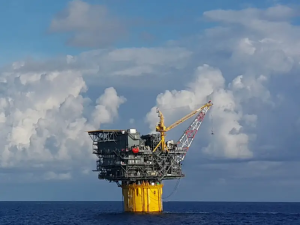
10 Most Popular Offshore Oil Rig Jobs for 2025
Major Types of Offshore Oil Rig Jobs See what similar jobs to offshore oil drilling jobs are hiring right now. If you’re interested in jobs related to offshore oil drilling, here are some of the popular related job searches on MarineInsight360 careers with the most job openings. A list of the 10 highest-paying offshore oil drilling jobs for 2025, including salary ranges. Offshore Structural Welding