
Understanding Rectifiers and Their Circuits on Ships
Understanding Rectifiers and Their Circuits on Ships: technology, equipment and fleet context for US, UK, Canada, Australia, Singapore and European...
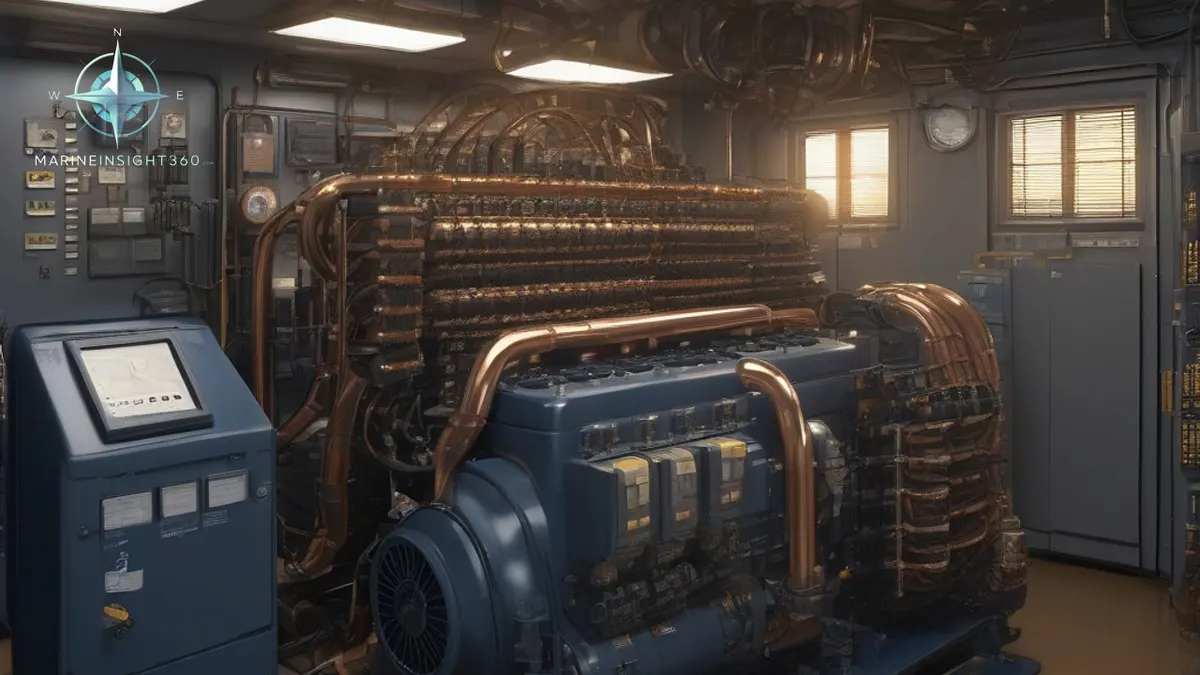
Rectifiers on ships convert alternating current (AC) into direct current (DC) for equipment that cannot run directly from the ship's AC supply. They are used in battery chargers, control circuits, automation panels, alarms, instrumentation, communication equipment and many electronic systems. A small rectifier fault can therefore affect much more than one component.
This guide explains how rectifiers work, where they are used onboard and what engineers and trainees should check when a DC circuit behaves incorrectly.
What a rectifier does
A rectifier uses semiconductor diodes to allow current to flow in one direction. In a simple circuit, this changes AC into pulsating DC. In practical shipboard equipment, smoothing capacitors, filters, regulators and protection devices are often added so that the output becomes suitable for electronic loads.
The rectifier does not create power on its own. It changes the form of electrical supply. Most ships generate AC power, while many control and backup systems need DC voltage. Rectifiers connect those two requirements.
Common rectifier arrangements
A half-wave rectifier uses one diode and conducts during only part of the AC cycle. It is simple but produces more ripple and is not common for important shipboard loads. A full-wave rectifier uses both halves of the AC cycle and produces a smoother output.
The bridge rectifier is widely used because four diodes can provide full-wave rectification without needing a centre-tapped transformer. Three-phase rectifier arrangements are used where higher power and smoother DC output are required, such as battery charging systems or larger control supplies.
Where rectifiers are used onboard
Rectifiers may be found in emergency battery chargers, navigation and communication power supplies, alarm monitoring systems, automation panels, generator excitation systems, cathodic protection equipment and variable speed drive control sections. Some circuits support equipment linked to rpm control, kW load sharing or machinery protection.
Because rectifiers often sit inside larger panels, the fault may first appear as a low DC voltage alarm, repeated fuse failure, noisy relay operation, unstable display or battery not charging properly.
Symptoms of rectifier problems
Common signs include low output voltage, high ripple, overheating, burnt smell, discoloured terminals, blown fuses, tripped breakers, swollen capacitors or unstable equipment. A failed diode may create open circuit, short circuit or reduced output depending on the arrangement.
Engineers should avoid replacing parts blindly. Check the incoming AC supply, transformer output, fuse continuity, diode condition, connections, load current and ventilation. A downstream fault can overload a healthy rectifier, so the connected load also needs attention.
Safe troubleshooting basics
Electrical troubleshooting should be done only by competent personnel following the vessel's isolation and permit procedures. Capacitors can hold charge after power is removed, and control panels may contain more than one supply. Always verify isolation with a suitable meter before touching conductors.
When testing diodes, use the diode function of a multimeter where appropriate and compare readings in forward and reverse directions. For live measurements, record AC input, DC output and any ripple checks according to the maker's manual and company procedure.
Common mistakes
- Replacing a rectifier without checking whether the connected load caused the failure.
- Ignoring cooling fans, dust and blocked ventilation around charger panels.
- Assuming low DC voltage always means a diode fault.
- Working inside a panel before stored energy has been discharged and verified.
Next steps
If you are learning ship electrical systems, trace one low-voltage DC circuit from the AC source through the transformer, rectifier, fuse and load. For more machinery and electrical explainers, visit the marine machinery knowledge base.
Operational context
For engineers and trainees, rectifiers should be checked against the maker's manual, the vessel's planned maintenance system and the company's safety procedures. The article gives a working explanation, but onboard action still depends on the exact machinery model, operating condition, alarms and isolation requirements.
Reader checks
- Confirm which system, drawing or manual applies to the equipment before taking action.
- Record symptoms such as pressure, temperature, vibration, noise, leakage or alarm history.
- Escalate defects that affect safety, propulsion, power generation or pollution prevention.
Common mistakes to avoid
A common mistake is treating a single symptom as the full fault. Shipboard machinery problems often involve operating conditions, maintenance history, spares quality and crew handover notes. Use this guide as a starting point, then compare it with the marine machinery knowledge base for related machinery topics.
How to use this guide
Use this article as a practical starting point for rectifiers, then check the details against the vessel, company procedure, local port requirement or training route that applies to your case. Maritime topics often look simple on paper, but the correct decision can change with ship type, rank, cargo, machinery condition, weather, route and documentation status.
If the topic affects safety, compliance, maintenance or career decisions, keep notes of the source, date and any follow-up action needed. Readers who need a wider view can continue through the marine machinery knowledge base and connect this page with related explanations before acting.
For onboard teams, the best use is during preparation, handover or review: identify the relevant point, compare it with the vessel's actual condition, and decide who must approve the next action.
Market context for high-compliance maritime regions
For readers in the United States, United Kingdom, Canada, Australia, Singapore and Europe, Understanding Rectifiers and Their Circuits on Ships should be compared with technical procurement, maintenance planning, vessel data, port operations and fleet compliance. The same maritime topic can have different practical meaning under USCG, MCA, Transport Canada, AMSA, MPA Singapore and European authority expectations.
Use the market links below to compare how mature shipping markets evaluate maritime technology, equipment, fleet tools and supplier decisions.