
Information Exchange in Maritime Operations
Information Exchange in Maritime Operations: safety, training and compliance context for US, UK, Canada, Australia, Singapore and European maritime...
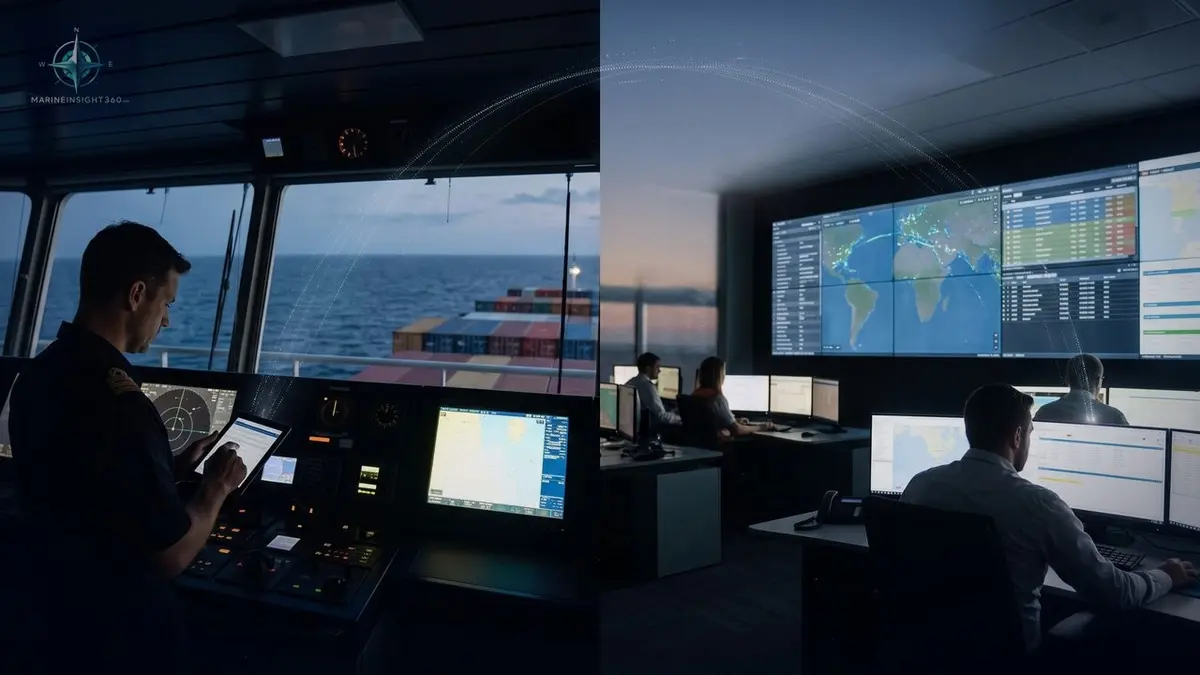
Maritime information exchange is the disciplined sharing of voyage, cargo, port, safety and technical information between ships and shore teams. When information is late or unclear, ports wait, crews rush, cargo documents are corrected at the last moment and avoidable safety risks appear. When the right information reaches the right people early, the whole operation becomes easier to control.
This guide explains the main benefits of information exchange in maritime operations and why it matters to ship crews, agents, charterers, port teams and managers.
Better voyage and port planning
Accurate estimated time of arrival, draft, cargo readiness, bunker status, pilot boarding details and berth instructions help all parties plan the port call. A vessel approaching at reduced speed, a delayed berth or a change in cargo sequence can affect tugs, pilots, mooring teams, surveyors and trucks.
Good information exchange reduces last-minute pressure on the master and crew. It also helps shore teams make better commercial decisions without pushing the vessel into unsafe speed, poor weather routing or rushed cargo work.
Improved cargo operations
Cargo operations depend on clear instructions. Bulk carriers need cargo hold readiness, trim plans and loading sequences. Tankers need cargo grades, manifold details, pressure limits and safety checks. Container vessels need stowage, dangerous goods and reefer information.
When ship and shore exchange cargo information early, they can identify conflicts before the operation starts. This reduces waiting time, documentation errors, unsafe loading conditions and disputes after completion.
Stronger safety and risk control
Safety information includes weather warnings, terminal restrictions, enclosed-space risks, hot work status, machinery limitations, emergency contacts and lessons from recent incidents. Sharing this information helps crews prepare the right controls before work begins.
For example, a known winch defect, a ballast limitation or a problem with fire detection should be shared with relevant people. Silence can create a chain of assumptions that leads to accidents.
Cleaner compliance and documentation
Maritime compliance depends on records. Port clearance, customs, immigration, dangerous goods declarations, oil record books, garbage records and certificates all rely on accurate data. Weak information exchange can lead to corrections, delays or port state control attention.
Digital systems help, but they do not replace judgement. The crew still needs to check that the information entered is complete, current and understood by the people using it.
Better maintenance and technical support
Machinery problems are easier to solve when the vessel sends clear information. Engineers should report symptoms, alarms, running hours, pressure readings, temperature changes, vibration, spare part details and photographs where appropriate. Shore teams can then support the vessel without guessing.
This matters for pumps, compressors, purifiers, boilers, generators and control systems. A vague message such as "pump not working" is much less useful than a short report explaining suction condition, discharge pressure, motor status and what checks have already been completed.
Common mistakes
- Sending information too late for the receiver to act on it.
- Copying too many people while leaving out the person responsible for action.
- Using unclear abbreviations that agents, terminals or junior crew may misunderstand.
- Assuming a digital update has been read, understood and accepted.
Operational context
Recommended Reading
What Are the Six Steps of Safe Mooring Operations?
The six steps of safe mooring operations are preparing for docking, approaching the berth, deploying the mooring lines, securing the ship, setting up gangway and access arrangements, and completing post-mooring…
Iran retaliates with missiles and drones, defying Trump’s warning
Learn iran with practical maritime context, safety checks, operational guidance and related resources for global shipping readers.
Hapag-Lloyd Invests in APM Terminals Rotterdam to Drive Growth
Hapag‑Lloyd’s new stake in APM Terminals Rotterdam aims to expand capacity, improve hinterland links and enhance crew efficiency in Europe’s busiest port.